
Canada Is Losing Businesses Faster Than It Can Replace Them with Brianna Solberg



 Apple Podcasts
 Spotify
 Amazon Music
 RSS Feed
 Episode 337 of The Business Development Podcast features a powerful and timely conversation with Brianna Solberg of the Canadian Federation of Independent Business, diving deep into what is now being called Canada’s “Entrepreneurial Drought.” Backed by real data, the episode uncovers a troubling reality: more businesses are closing than opening in Canada for six consecutive quarters, marking the worst startup activity outside of the pandemic. Together, Kelly and Brianna break down the mounting pressures facing small and medium-sized businesses, including rising costs, labor shortages, declining consumer demand, and a growing sense that entrepreneurship in Canada is becoming increasingly unsustainable.
But this conversation goes far beyond economics. Kelly and Brianna explore the deeper, long-term implications of this trend, highlighting how the decline of small business threatens the very fabric of Canadian communities. From lost local jobs and reduced economic circulation to the erosion of vibrant main streets and community identity, the impact is far-reaching. The episode also outlines potential solutions, including reducing the cost of doing business, cutting regulatory red tape, and addressing labor market challenges, while calling for greater awareness, advocacy, and action from both business owners and policymakers.
Key Takeaways:
- Canada is facing an entrepreneurial drought, with more businesses closing than opening for six consecutive quarters.
- Small and medium-sized businesses are not a side issue in Canada. They make up 99% of all businesses and employ around 60% of private sector workers.
- When small businesses struggle, communities struggle with them.
- The decline of entrepreneurship is not just an economic problem. It affects jobs, local identity, opportunity, and community vibrancy.
- Many business owners are working harder than ever just to survive, not thrive.
- Rising costs, payroll burdens, taxes, insurance, rent, and utilities are making it harder for businesses to grow.
- Labour shortages remain a major barrier, especially for small businesses that cannot easily absorb hiring challenges.
- Red tape takes time, money, and energy away from actually running and growing a business.
- Internal trade barriers are holding Canada back from becoming a true national economic union.
- Business owners need to speak up, get involved, and add their voices to organizations advocating for real change.
Connect with Brianna Solberg
Connect with Brianna on LinkedIn:
https://www.linkedin.com/in/brianna-solberg/
Join the Canadian Federation of Independent Business
If you are a business owner in Canada, your voice matters now more than ever.
The CFIB represents over 100,000 small and medium-sized businesses across the country, advocating for better policy, lower costs, and a stronger future for entrepreneurs.
Join here:
https://www.cfib-fcei.ca/en/membership-benefits
Sponsor Mentions
🎸 Sponsor Shoutouts: Thank you Colin Harms and Jamie Crozier for your steadfast support of The Business Development Podcast! 🫶
The Business Development Podcast is proudly supported by Hypervac Technologies, Hyperfab, Thunder Bay Hydraulics Inc, and Atlas Elite Lifts. 🎸⭐
🔹 Hypervac Technologies: North America’s leader in vacuum truck manufacturing, building high performance hydrovac and industrial vacuum trucks designed for the toughest field conditions.
🔹 Hyperfab: The custom fabrication division of Hypervac, delivering engineered solutions and specialized builds tailored to demanding industrial applications.
🔹 Thunder Bay Hydraulics Inc: A trusted provider of hydraulic cylinder repair and manufacturing, supporting industries like mining, forestry, and construction with reliable, high quality service.
🔹 Atlas Elite Lifts: A premium supplier of automotive lift systems, focused on performance, safety, and long term reliability for shops and garages.
Join The Catalyst Club Community
If you are serious about growth, leadership, and surrounding yourself with high level thinkers, The Catalyst Club is where you need to be.
Join us here:
www.kellykennedyofficial.com/thecatalystclub
Mentioned in this episode:
Hyperfab Midroll
Canada Is Losing Businesses Faster Than It Can Replace Them with Brianna Solberg
Brianna Solberg: This is not fake news. We are just spreading facts and the facts are more businesses have been closing than opening in Canada for six consecutive quarters. And outside of the pandemic. These are the worst. This is the worst startup activity that we have ever seen.
Intro: The Great Mark Cuban once said, business happens over years and years.
Value is measured in the total upside of a business relationship, not by how much you squeezed out in any one deal, and we couldn't agree more. This is the Business Development podcast
based in Edmonton, Alberta, Canada. In broadcasting to the world, you'll get expert business development advice, tips, and experiences, and you'll hear interviews with business owners, CEOs, and business development reps.
You'll get actionable advice on how to grow business,
brought to you by Capital Business Development Capitalbd.ca.
Let's do it. Welcome. To the Business Development Podcast, and now your expert host, Kelly Kennedy.
Kelly Kennedy: Hello, welcome to episode 337 of the Business Development Podcast, and today it is my absolute pleasure to welcome to our stage Brianna Solberg.
Brianna is the Director of Legislative Affairs for the Prairies and Northern Canada at the Canadian Federation of Independent Business, where she helps represent the interests of over 103,000 small and medium sized businesses across the country. She leads advocacy, research, and policy efforts on behalf of approximately 10,000 members across her region, working closely with government officials and industry leaders to advance practical solutions on key issues including taxation, labor, and the rising costs of doing business.
With a background in public policy, legislative affairs, and sector advocacy, Rihanna brings both sharp insight and real world relevance to the conversations shaping the business environments across Western and Northern Canada. What makes Brianna such an important voice in this space is that she's not just talking about policy from a distance.
She is in the work. In the conversations and in the fight for people building, employing, and carrying so much of this country forward, she brings intelligence, conviction, and clarity to issues that directly impact entrepreneurs every single day. And when the stakes are high for small business, Brianna is one of the people making sure their voice is heard loud, clear and impossible to ignore.
Brianna, it is such an honor and a privilege to have you on our stage today.
Brianna Solberg: Thank you so much for having me, Kelly. Yeah, it's great to be here and I appreciate that introduction. That's better than I could introduce myself. I was telling someone last night over dinner, they asked, what do you do? And I, I, oh, I change my answer every time.
Sometimes I say lobbyists, sometimes I say small business advocate. But yeah, I really appreciate that introduction. And I also feel like. I should have headphones and a microphone. Just to set the stage I, one of the first podcasts that I've done and I, I just feel like you look very much like you're on a podcast.
I wish I had the headphones.
Kelly Kennedy: Oh, that's okay. Uh, seriously, we've had people pop in from headsets, from their car. You name it. There's been a lot, we've, we've interviewed pretty close to 200 people on this show already. So honestly, your setup is, you know, on the upper edge actually. You're doing great.
Brianna Solberg: Great.
Well, I'm coming to you live from, uh, from Regina, Saskatchewan this morning. So. Happy to be here.
Kelly Kennedy: Amazing. No, that's great. Like I said, I think like many Canadians across this country, you know, we read the entrepreneurial drought report last week and I was just like, immediately I need to understand more about what is going on here.
Um, you know, my world, I'm an entrepreneur myself, just celebrated five years this year. Uh, didn't realize how much of a big deal that actually was until I read your report. But, uh, you know, I've been advocating for entrepreneurship since the start of this show, a big part of the Business development podcast.
Is inspiring and educating people and trying to help people make the jump, which I think is kind of a cool fit for this show, given that you're looking to advocate, you know, for more small business, small and medium sized business. I had no idea how big and how impactful small and medium sized business is in Canada.
I had no idea that it was 99% of the private business in Canada, which is pretty unbelievable. And I'm really excited to just get to know you, understand the Canadian Federation of Independent Business, what your mission is, what your goals are. I'd like to chat about the report a little bit and then, you know, I mean, I'm a solutions guy.
Let's talk about how the heck we can turn this thing around and, uh, you know, get Canada back on the upswing. But before we do all that, you know, who is Brianna Solberg? How did you end up on this path that has led you to where you are today?
Brianna Solberg: Yeah originally I'm actually from Winnipeg. Okay. Born and raised in Winnipeg, Manitoba.
And, uh, when I graduated I actually got recruited to play volleyball, so that's what brought me out to Calgary. And I did, uh, sort of sustainable development and political science undergrad there while playing volleyball. And then when I graduated I went into the Master of Public Policy Program at University of Calgary.
And, and that program, it was a pretty economics heavy program, but from my understanding, like being in that program, they were really trying to educate like the next generation of public service workers. You know, they were very much thinking that all of us would apply for bureaucratic roles and administration or end up in politics like that.
Yeah. In the sense that I got in and I was bought in, I would sit at the back of the class every class and and just be pumping out applications for, government of Canada.
Kelly Kennedy: Yeah.
Brianna Solberg: Um, and the closest I got, I think I got through all the interviews for Service Canada. Which they make you jump through so many hoops.
I don't know how any, how anybody has the patience. But, um, at the end of the day, uh, I ended up moving once I graduated to Regina because my, my husband moved here for work. And, uh, when I moved here, he just said, I don't think, I think you should try the private sector first before you jump into working for the government.
And you know, we learned a little bit about lobbying and advocacy in the Master of Public Policy Program, but we learned about it in the sense that like we were all supposed to become bureaucrats. So like we needed to learn how we were going to be lobbied and how to interact with lobbyists. So I never foresaw myself becoming an advocate or lobbyist myself.
But yeah, when I graduated and moved to Regina, the first job I found myself in was working with the Regina Region Home Builders Association. So learned a lot there. It was a great first job. Really loved my boss and learned about lobbying for the construction sector at the municipal and provincial level.
And then a friend of mine that I actually went to school with in Calgary reached out, 'cause she was working for CFIB, and she asked if I knew anyone who was interested in a role they had for the prairies. And I said, I might, I might be, um, yes. And uh, so the rest is history. And then I, so I joined CFIB it'll be four, four years ago now.
Kelly Kennedy: Wow.
Brianna Solberg: Five years in September. And, uh, yeah. So now as you said, I'm the director for the queries, so Manitoba, Saskatchewan, and the territories. So up north. Yeah. And like the learning experiences and uh, the rooms that I've been able to sit in, just being in this role, like I'm so. I'm so fortunate and I really have appreciated everything that CFIB has has allowed me to do.
It's an organization where they really just, you know, they support you from the ground up. There's no, sky's the limit. And I've appreciated every opportunity. When I first started, I definitely had a bit of imposter syndrome, but nowadays I'm just constantly being like amazed really at the impact that our work really does have and continues to have.
And this report that we'll talk about is a perfect example of that where what we say does really matter. And people will often ask me, like, as a lobbyist, like, it must be frustrating that you're constantly asking for things and like, you don't actually, what kind of influence do you actually have?
But we, we do, we move the needle. And when we're speaking on behalf of 103,000 small businesses like it. People pay attention. And, uh, this report's a perfect example how when we say that more businesses are closing and opening, and this is a serious wake up call.
Kelly Kennedy: Yeah.
Brianna Solberg: Like people will listen.
Governments have to listen. And business owners unfortunately are nodding along, like, yeah, it is really hard to be in business right now. So it's a, it's unfortunate that we're having to talk about such poor circumstances for businesses, but that's really why organizations like ours exist is to make sure that, that entrepreneurs and businesses can succeed.
Kelly Kennedy: Well on behalf of business owners across Western Canada.
Me included. Let me just thank you so much for the hard work that you are putting into this. I, I, I, like I said to you earlier, I was at my kids' football practice and I was reading the report and just thinking. My God, thank God somebody is talking about this. Right? Yeah. Like as I told you, I run an entrepreneurship community.
We have, you know, pretty close here to 90 members at this point, and I can't tell you how many times we've been in the room having honest conversations where people are just struggling. Mm-hmm. I can't get ahead, you know, I should just go back to work. Like, what am I doing here? Trying to chase my dream.
And it's like, I hate that. I absolutely hate that. And everyone who's listening to this show knows I'm such an advocate for entrepreneurship. Yeah. But I've sat down with Shelby, my fiance many, many times and just said like, why is it so freaking hard to get ahead in this country? Wow. And that's how it's felt, honestly, to me.
It's felt like I'm killing myself. I'm working harder than I ever have. We have multiple arms to our business. Yeah. We're surviving, we're getting by, but we are definitely not, you know, thriving
Brianna Solberg: mm-hmm.
Kelly Kennedy: In business in Western Canada at this point. And I think it is important that we're having these conversations and that hopefully, you know, governments start to pay attention because I wasn't even, I wasn't even aware of how powerful small business was in Canada.
Brianna Solberg: Yeah. And you mentioned the stat earlier, small to medium sized firms. So that's what CFIB.
Kelly Kennedy: Yes.
Brianna Solberg: Um, any, anyone with less than 500 employees that's a Canadian owned corp can join our organization. And so businesses with less than 500 employees make up 99% of all business
Kelly Kennedy: Wow.
Brianna Solberg: In this country. And they employ around 60% of all private sector workers.
So this is really like when they say, I know it sounds cliche, but to say that small businesses are the backbone of the economy or what we call the foundations of our economy, it's true. Like without them, where do people work? Where do people get the services that they need? Uh, they pay local taxes, they support local charities, sports teams, like they teams employ people within the community.
And, uh, it's really unfortunate that they seem like lately what we hear from them is small businesses are too often an afterthought.
Kelly Kennedy: Yeah.
Brianna Solberg: In policy decisions as governments tout big bus, big subsidies for, for large businesses and they tout investments. Mega corps. Yeah. And they're, they're saying like, this is economic development.
This is growth. Like we, we have people coming in craft Heinz, Coca-Cola coming in and investing billions of dollars. And uh, that's what we're calling economic growth. But what about the 99% of businesses who say, we can't grow, we can't expand, we're not investing because it's too uncertain.
Kelly Kennedy: Yeah, absolutely.
And you know, I guess one of the things that I think maybe is important for, you know, governments to remember is that it's private sector money that's paying for their jobs. Yeah. Right? Like all of these government employees in public sector, we absolutely need them. But that money is coming from the private sector.
So if the private sector dries up, guess what? Those jobs are gonna dry up in the public sector too, because they're simply not sustainable.
Brianna Solberg: And not sustainable is, is very accurate. And it's, it's like we're seeing a shrinking of the private sector. A bloat in the public sector. And so it is not sustainable that then something has to change for sure.
Kelly Kennedy: Absolutely. We're gonna get into that, but I'd actually like to spend a little bit of time on the Canadian Federation of Independent Business. Um, I'll be honest, I knew very little about this organization ahead of doing the research for this show. I don't know whether I have my head in the sand, Brianna.
I might, but it has not come up much on the show. And so yeah, I think what you guys are doing is incredible. And I would just like to spend a little bit of time on the organization itself. Um, tell us a little bit about, about the Canadian Federation of Independent Business.
Brianna Solberg: Sure. Well, I think that now it might be a bit like, have you heard of that Red Honda Theory
Kelly Kennedy: where now I'll see it everywhere?
Brianna Solberg: Everywhere we're. Kind of everywhere. Um, but really it's, uh, Canada's largest association of small to medium sized businesses. As we've mentioned, we have 103,000 small business members. Wow. Uh, those with up to 500 employees all sectors of the economy. They obviously have to be Canadian owned and, uh, it's, um, across all provinces as well.
There, there's a me, I'm the director for the Prairies, but there's a me in every, every province. PC has a director, Alberta has a director, Ontario, Quebec Atlantic. And, uh, really what our job is to serve as the voice of small businesses. So we're very grassroots in the sense that all of our advocacy efforts are based on what we hear from our members through our surveys.
Okay. That's what really gives C-F-I-B alot of our credibility. That we have the data to back up everything that we're saying. We don't take policy position unless our members are telling us that that's what they support. And so our research department is top notch. We produce monthly surveys and, and really we are constantly taking the temperature of the small business sector.
Yeah. And, and our job is to serve as their voice. So making sure that policy makers and governments and decision makers know what are the circumstances that small businesses are facing right now. And, uh, if there, if it comes to policy, you know, um, getting feedback on, on policy that's been implemented so that we can hopefully change it if necessary and make sure that it works for small businesses or stopping bad policy before it happens by being consulted in the lead up.
And at the end of the day, I spend a lot of time really just. Trying to frame our members' perspective for governments who they're the ones making, making all the decisions at the end of the day, but we just hope that they're informed decisions and yeah, that's what CFB needs to do. And we're a little bit different, uh, I should say.
So we're a little bit different from like a Chamber of Commerce. That was
Kelly Kennedy: gonna be my next question. Yeah. Yeah.
Brianna Solberg: So, uh, first of all, in the sense that our members are all small to medium. Okay. So we have no big businesses as our members. We are completely membership funded, so we get no government funding at all.
Obviously we're nonpartisan as well, so we will work with any political party regardless of their stripe. And and we do have good relationships with all, with all parties. And really our job is to criticize bad policy and to encourage good policy regardless of which party it comes from. Yeah, we're, we're, we also aren't technically like, chambers provide a lot of networking opportunities for their members.
Kelly Kennedy: Yeah.
Brianna Solberg: We're not really a networking organization, but what we provide is the advocacy. That's my job. And then we have business resources. So we have people on the phones all day ready to take calls from business owners to help them solve their problems. Amazing. So we cognize that small businesses don't have compliance departments, they don't have finance departments or administrative departments or human resources.
So we have people on the phones all day ready to help business owners walk through an HR situation, whether they have to hire somebody, fire somebody, help them figure out how to file their taxes properly. Like literally you could imagine during COVID, it was like helping all day, like around the clock, helping business owners figure out what to do, what they're eligible for in terms of support.
We also have savings and partnerships. So we have, uh, partnerships with, many organizations that, that see the numbers that we have behind us. Yeah. And say, okay, great. I wanna work with CFIP because I'm gonna provide a discount to their 103,000 members. So, pay Works Telus discounts on gas, on airfare, hotels payment processing obviously as I mentioned, telecommunications, but all those things that businesses really need and are an expense.
We look for partnerships so that we can provide discounts on those things for businesses. Shipping is another one.
Kelly Kennedy: Wow, okay. I would make the argument that you're actually a, like a chamber, but on steroids that I would make the argument that this Yeah, because you're absolutely right, like Chambers are great.
I've been part of many Chambers over time. I have struggled a little bit with the value of them, to be honest. I don't think that you get the same level of impact through a Chamber that you necessarily hope for. I think connections is the greatest thing that a Chamber does for you. So yeah, you kind of made the point that like, that's their thing.
Absolutely. That would be my argument too. But what it kind of sounds like is that while a Chamber advocates locally and they absolutely do work with, you know, the legislature in Edmonton or whatever else, you, you are working on a much bigger level. You're looking at a much bigger picture.
Brianna Solberg: Yeah. And because I would say because we don't get any government funding, we, with the, I say this, keeping in mind that we do have relationships to maintain, but we get to be a little bit punchier when we're criticizing bad policy because, they don't pay our salary, our members do. And so we really, if it's something that's impacting our members, we will go to that for them. And our motto's kind of been, we never give up, never go away.
So that's why I said at the beginning, you're now gonna see us everywhere because we do, we kind of we're representing all sectors. And really on all matters that impact business. So you'll see us everywhere because there's virtually like not an issue that relates to business that we don't touch.
Kelly Kennedy: Wow.
No, that's incredible. And I really love the fact that you, you offer services like support services. I think that's a really key point here. 'cause so many business owners are looking for a little bit of support. They don't quite understand, you know, certain things. And just having somebody to call is super, super valuable.
So I really, really love that. No, that's amazing. Brianna, thank you so much for bringing, uh, us into the Canadian Federation for Independent Business. If you're listening to this right now, the join link will be in the show notes as well as all posts for the show. Yeah. So if you're interested in learning more, it'll be there.
And, uh, no, it sounds like an incredible organization to support. Should we get into the meat and potatoes of our conversation now, Brianna?
Brianna Solberg: Yeah. Yeah.
Kelly Kennedy: What the heck is going on in Canada? Uh, what's happening to our small businesses?
Brianna Solberg: Yeah, so it's, um. Something we have, uh, decided to call the entrepreneurial drought.
And it sounds bad because it's so essentially what, when you think of startup of small businesses and the, and the economy of small businesses as a pipeline, that pipeline is drying up. So we have a drought and essentially the, the findings of this report are really stark and they're based on statistics, Canada findings.
So we have the facts to back it up, and that's what we're essentially doing. We're not, this is not fake news. We are just spreading facts. And the facts are more businesses have been closing, then opening in Canada for six consecutive quarters and outside of the pandemic, these are the worst. This is the worst startup activity that we have ever seen.
Kelly Kennedy: Wow.
Brianna Solberg: Um, and so the, the trend of overall business creation started to slow in the eighties, and that's what we have data to back that up as well. But the actual net negative numbers that we're seeing now, this has been since early 2024. So as I said, six consecutive quarters of this. And in addition to that, we have, uh, our own CFIB data indicating that 55% of small businesses would not recommend that the next generation start a business right now.
Yeah. So when you have people who have started and grown and broken their back to build something of their own saying that they wouldn't recommend someone else do. So that's something governments need to take seriously because that means that like the next generation of entrepreneurs is essentially being discouraged.
So why would they start if those who have done it already say it's not worth the risk? So things need to change if we want to reverse this trend and end the entrepreneurial drought.
Kelly Kennedy: Yeah. Yeah. I wanna spend a little bit of time back on the eighties data actually, and maybe you can help me understand it a little bit more, because the eighties looked to be like a pretty boom in time in Canada.
It looked pretty great. I think it showed something like 24, uh, businesses started for every hundred businesses. Help me understand that data a little bit. I might be misrepresenting it.
Brianna Solberg: Look, I wasn't alive in the eighties, so I don't know. I don't know. Yeah, me neither. But I think what just generally started to happen was, was maybe with the, the, I don't know, maybe was the technology starting to boom and people seeing that the economy was going in a different direction?
People
Kelly Kennedy: were optimistic. Yeah.
Brianna Solberg: Maybe, yeah. Maybe more access to information meant that, like some people started seeing certain jobs as obsolete. And I think it, it started to create a lot of maybe new innovation and so. People looking to get into different roles. But I think I'm totally speculating here because I actually dunno, but
Kelly Kennedy: yeah,
Brianna Solberg: maybe a lot of businesses that were starting up at that time grew fast, maybe and employed a lot of people.
Kelly Kennedy: Yeah.
Brianna Solberg: So you have a lot of big business. It drives, drives a lot of of economic growth. But, you know, small, what we're talking about is small businesses, so restaurants, hotels, whatever. I think that maybe the, the need for services wasn't there. I don't know. Maybe everybody was going to work in factories.
Yeah. But really the overall creation the trend of business creation started to slow
Kelly Kennedy: Yeah.
Brianna Solberg: In the eighties. And that, that is the data that we have. So I don't know if something flipped in the nineties where weaker startup activity and, and really what we're seeing right now. Is also tied to the fact that we have an aging population.
Kelly Kennedy: Mm-hmm.
Brianna Solberg: And a lot of these people who did start these businesses are to retire exiting.
Kelly Kennedy: Right? Yeah.
Brianna Solberg: And, and that's also what the report does get into is yes, we're seeing what we call unhealthy exits, where businesses who, who can't make it through or having to close their doors, but we're also seeing healthy exits where businesses that are completely viable are simply just seizing to exist because they can't find someone to buy that business or you know, they, they didn't have a succession plan.
Kelly Kennedy: Mm-hmm.
Brianna Solberg: We know that succession's a huge, there's $2 trillion worth of assets are set to change hands over the next decade because of all these people aging and nearing retirement.
Kelly Kennedy: Yeah.
Brianna Solberg: And we can't afford to buble this. We really, we know for a fact that only 9% say that they have a formal succession plan.
So that's, I believe it. That's very serious. And, uh, and without one it's like they just expect someone to show up and be ready to purchase their business. But 55% of people are saying they wouldn't encourage someone to buy a business. So why would someone show up just to buy their, their business?
And really what we are seeing is this trend of private equity firms coming in and scooping up every business in, in a certain sector, what we're calling a roll up. And we're, it's all sectors. Finance pharmaceuticals, grocery, we've seen the market come to be dominated by a few large players.
And you know, more often than not, they're American private equity firms because they have the capital to mm-hmm. Do so. And so it's really, it's a very concerning trend that, you know, a lot of these, these small businesses that did start and grow in Canada are now no longer Canadian owned because they're owned by an American private equity firm.
So that's obviously another thing to, to be very cognizant of and I think government's finding a way to encourage. The next generation and find ways for succession to just be a lot smoother here in Canada.
Kelly Kennedy: Yeah. Um,
Brianna Solberg: that's gonna be absolutely necessary.
Kelly Kennedy: I, I love that. And I've talked with so many entrepreneurs and you know what I think a part of it is Brianna, is that they don't want to, they don't want to quit and they, and they don't plan for it because then that's kind of it, somewhat admitting that they have to quit, right?
Yeah. Yeah. And so many of these entrepreneurs have worked so hard to build these businesses. They're gonna live forever. Right. Then nothing bad is ever gonna happen to them. That's right.
Yeah.
And then it does. And suddenly, oh crap, we didn't have a plan. Yeah. So, yeah, I think maybe a little bit more advocacy.
From the government on, on helping these entrepreneurs make a plan on encouraging and providing support systems to do so, uh, would be valuable. The other thing I wanted to talk about was specifically private equity buying up Main Street. Because that was a part of the report that kind of resonated with me as someone who grew up in a small town, literally had a main street and is seeing all of these, companies pop up on that, that are, that are larger companies now.
Right? Yeah. Replacing all of the smaller tourist organizations or banks or whatever else. Bring me into that. What happens when private equity starts to buy up Main Street for the other business owners? Is it a negative impact?
Brianna Solberg: Yeah. I mean, obviously we understand that for the businesses who are striking these deals, it's because they're ma, the private equity firms make them an offer that they can't refuse, right?
So it's not their fault. I think ultimately though, what we do see, when you see. Heavy market concentration and you see a few players control the, the majority of the market. It does, it decreases competition, it decreases innovation. It further deters new entrepreneurs from entering the market and taking a risk.
Yeah. You know, they're, they're competing against someone who has a private equity firm backing them. So it really does, it, it threatens overall innovation and competition for sure.
Kelly Kennedy: It basically creates a moat that companies, smaller companies who maybe could have are straight up just choosing, I don't want to compete against HR Block, or I don't want to compete against Mom and pops, you know, donuts or whatever.
There's no point.
Brianna Solberg: Yeah. And then we're seeing it more and more too, right. The competition. That's a, that's another thing that our report does get into is, supporting business. Means more than just supporting big business, we have to focus on small business. Yeah. And improve, uh, you know, we gotta look at the competition act.
And as the government does look to review this act, we have to make sure that we create a level playing field and that small businesses have the chance to, to compete and succeed. Because otherwise, like I said, like we want a vibrant economy, but it won't, won't. be that way if we continue to see the market dominated by a single, large firm.
Kelly Kennedy: Amazing. Let's spend some time there. Because one of the gripes that I've had as a business owner doing a lot of things, I do multiple podcasts, I've started multiple branches of my business. I've done a lot. Mm-hmm. And one of the complaints that I've kind of had along the way is that a lot of the local resources that have government grants or government ties, none of that stuff applies Uhhuh.
Like there's so many businesses where it kind of feels like, man, I sure could use some help right now. And there's literally nothing out there that's truly valuable that, that, that makes a big difference for small business. Unless you're in tech, unless you're in med tech or something along those lines that they're willing to dump a lot of money to support.
But like we're talking about such a small fraction of the businesses out there that need help, it kind of blows my mind. Bring me into your conversations with government. Why is it that they seem so reluctant to help smaller private business?
Brianna Solberg: Well, right now I think it's really just about headline grabbing announcements.
You know, they want to make it look like you, you wanna announce a billion dollar deal that you've just struck or like that you're attracting, foreign investment and you wanna make it look like that. That's economic growth. But in reality it's, you're ignoring the fact that these businesses may be small.
The amount of economic contribution individually that they may provide may be small, but they are the masses, like we said, 99% of all businesses. So if we see, we continue to see more businesses closing and opening. Yeah. Like that's when it'll be too late, really. Um, and what we're seeing now really should be taken as a warning sign.
Kelly Kennedy: It's really interesting because like, you know, I mean, I've busted my butt to build this show. I think at this point we are the largest business podcast coming out of Edmonton. We're rallying pretty high for international impact for Alberta. And yet there's still no support. There's zero support for media outlets like me trying to, you know, help business within Canada.
We shine a big spotlight on our province Yeah. On Canada and what we're doing. And there's absolutely nothing out there for us. You know, I was so proud last year we won a signal award, an international award. Uh, we got bronze, but we were competing against billion dollar networks from around the world.
Many of them in, in, you know, us, BNN, you name it. And somehow as a small independent show, privately funded, we still managed to place, which I thought was pretty incredible. Nothing, not a single reach out from anybody. No news just swept completely under the rug as a small, independent business making a huge global impact, which.
It really surprised me, honestly.
Brianna Solberg: Yeah.
Kelly Kennedy: Yeah. I was kind of shocked.
Brianna Solberg: Yeah. And I, I think that just goes along with this trend that we're seeing the majority of businesses saying that they feel unsupported by governments. They don't believe that their government has a plan to support entrepreneurship.
We saw coast to coast, really provincial budgets come out this year, and virtually none of them had a small business platform. Yeah. Or plan support small businesses. And I think really like what it what also is contradictory is that like once your business does grow beyond a certain threshold in this country, your costs increased significantly.
Yeah. Your taxes increased significantly. So businesses are almost encouraged to stay small to avoid massive jump in their, in their tax, uh, burden. But. At the same time, there's no support for small businesses. So governments are almost thinking like, well, they'll succeed if they can make it, they'll grow.
And then, and then once they grow to a certain threshold, then we'll take them seriously. But
Kelly Kennedy: yeah,
Brianna Solberg: but really what we're talking about is weak startup activity that we've been seeing is extremely alarming. And, uh, so one of the things that CFIB has consistently been pushing for is, uh, on the small business corporate tax rate threshold to have the federal government reduce the rate from nine to 6%, and then in addition to raise threshold to 700,000, right now it's 500,000.
So just allowing businesses to claim more income and hold on to more of that that capital at a lower tax rate.
Kelly Kennedy: That would be
Brianna Solberg: amazing. And then, uh, provincially, we're hoping to see all provinces reduce the small business corporate tax rate to 0%.
Kelly Kennedy: Yeah.
Brianna Solberg: By 2030. And, uh, and increase their thresholds to 700,000 as well, just to, just to promote growth.
And businesses could really use that capital to reinvest, hire, grow. Yeah.
Kelly Kennedy: A hundred percent. One of the things that surprised me the most when I started my business was how much money I had to make just to get by. Just to get by. I think when I was younger I thought, oh, well, you know, if we make like 15 or 20,000 a month, we're thriving.
Life is great. Right? Holy crap. You need to make like 15 or 20,000 a month just to pay yourself and put a teeny, tiny amount of money in the bank. Yeah. Like it never ceases to amaze me how hard. Entrepreneurs have to work simply to pay themselves a reasonable salary. Yeah. Not a, not a amazing salary. A reasonable salary.
Likely less than they were making when they were employees.
Brianna Solberg: Totally. And not to mention if you want to hire employees,
Kelly Kennedy: oh, that's just out of the, that's just off the table for so many businesses, not even possible. Almost everybody I know is now looking to hire consultants or contractors as opposed to employees because they simply cannot afford the consistent pay of an employee.
Brianna Solberg: Yeah. And if you wanna grow and expand, you need help. You need to be able to hire staff.
Kelly Kennedy: Absolutely.
Brianna Solberg: And another issue that our report does get into even those who can't afford to bring on staff, are unfortunately facing labor shortages. Yeah. Um, and that's a problem that really in Canada, it's, it's started before the pandemic the consistent skilled labor shortage that we've been seeing.
Pandemic sort of exacerbated that we saw for some reason, a lot of people are just unwilling to do certain work these days. And we know that small business owners themselves, CFIB, put out a report a couple years ago to show that the owner themselves will work 59 hour work weeks just to make up for the lack of staff.
Kelly Kennedy: A hundred percent.
Brianna Solberg: They, they're breaking their backs, just trying to cover the hours that they, they really could use the help, but either they. They can't afford it or they can't find somebody with the skills they need.
Kelly Kennedy: Oh my gosh. And I just wanna shout out all the business owners right now. You guys are incredible guys and gals out there are working their butts off trying to keep their doors open.
Um, us included big hand up, right? Like, I could work all hours of the day if it was allowed.
Brianna Solberg: Yeah.
Kelly Kennedy: It just is what it is. It's so much work to keep up. Right. And we do it because we love what we're doing. Absolutely. I, I feel like you have to have massive passion for whatever entrepreneurial journey you are hopping on because you are going to work your butt off.
And, uh, my gosh, do I ever just hope you guys are successful?
Brianna Solberg: Yeah.
Kelly Kennedy: And I'm so thankful that we have people like you out there advocating on our behalf. Brianna, like, thank you so much
Brianna Solberg: Yeah.
Kelly Kennedy: For choosing the line of work you have.
Brianna Solberg: We know that, um, yeah. For our members, around half of them say that skilled labor shortages are the number one factor that limits them from growing and expanding.
Wow. Unfortunately, the, the trend that we've seen overtake labor shortages recently is a lack of consumer demand. So that means that businesses aren't bringing in the revenues that they hope to bring in. Uh, yeah, which is what we say is it's creating sort of a perfect storm because we know that every line item in their budget has increased.
Yeah. Costs across the board for everything. Rent, wages, utilities, insurance, you name it, it's more expensive. Now, at the same time, we have this alarming trend where consumer demand has been decreasing because consumers are facing the same affordability pressures, right? We know that when budgets are tight, discretionary spending is often the first to go.
And so people are looking to keep their cards close to their chest and, and save money wherever they can. So we can't, we're not by no means are we saying that consumers are, are. Not making the right choices. We, we know they're doing what's best for themselves, but at the end of the day, it's like, why is it that, that, uh, small businesses can't offer as competitive pricing as Walmart or Amazon?
And it's, it's because all, like we said earlier, there's, there is not a level playing field and the cards are stacked against them. And the ability for these small Es to keep their prices low and competitive. Is
Kelly Kennedy: it's impossible.
Brianna Solberg: Completely eroded. Yeah.
Kelly Kennedy: Yeah. It's impossible. Yeah. No, and, and you know, I mean, as somebody who's a business owner and a parent and running a household, absolutely.
We have had to, we have had to cut back. We've had to make choices that have been really, really hard on things that we enjoy, things we love to do, vacations. We haven't been on vacation like two years. Like, wow. It just is what it is. There's not a lot that you can do at this time economically in order to get by.
And so I completely understand that. And you're right. So like, if you are having to make those choices at home, remember that your clients as a small business are also making choices on like, how do we keep the lights on? How do we keep feeding our 500 employees? Imagine that at scale, and they're having to make hard choices.
And some of those hard choices are, we can't hire you as a consultant anymore. We can't pay for your service anymore. We have to find other solutions. And so you're right, it's like a cascading effect. Is that. It's hurting everybody along the line. Not just big business, but big business, medium business, small business, and the average person.
Brianna Solberg: Yeah. And one thing to, to sort of try to promote shopping local and supporting local the stats that we try to remind people of this came out in a C-F-I-B report a couple years ago. 66 cents of every dollar that we as consumers spend at a local business will stay within our local community.
Kelly Kennedy: Wow.
Brianna Solberg: Um, that's through, you know, these, these businesses are paying local property taxes, local income taxes they're paying their employees who then go on to pay their own local taxes. So that money stays within the community as opposed to if you choose to shop at a large multinational, only 11 cents of that dollar will stay in your community.
Wow. So that's, that's huge. Yeah. Yeah. And really what we're seeing is this trend where. Consumers feel like they have no choice but to follow the discount and they'll go shop at the large multinational, but then it just perpetuates the problem that we're seeing because that money doesn't get circulated in our economy.
Kelly Kennedy: Oh man. You know what's kind of scary about that, Brianna? Is that like people don't think of the impact they're having to their own towns and cities, right? Like it's not something that really crosses your mind, but over 20 years, 30 years of that amount of money not going into your community, what does that mean for your schools?
Yeah. Your grocery stores, the, you know, your local experience your crime rate, your everything. Yeah. Like the whole community suffers.
Brianna Solberg: Yeah. It's the Yeah, exactly. The vibrancy and the dynamism of our communities. It's also like where do you want your kid to be able to get their first job? You know, like these are the businesses that are gonna be employing
Kelly Kennedy: Yeah.
Brianna Solberg: Young, you know, the next generation of, of workers in the market and, and it really is just. All the cards are stacked against them right now. And that's really in a nutshell, what this report does. Back to the report for a second's. A, it's a two part report. So the first part really laid out all the data that, that, proves that this is happening, we can't ignore it.
And part two, which it comes out on the 27th part two is about solutions. So it actually makes a series of recommendations for governments to address all of the issues that, that we identify are the issues that are barricading businesses from succeeding. So it's broken down into three key priority areas for action.
The first one being reducing the cost of doing business. As we said, costs across the board have increased.
Kelly Kennedy: Yeah,
Brianna Solberg: heavy tax burden. Additionally. The second key priority area is to look at cutting red tape, which is something we'll get into. We haven't really, we haven't touched that subject yet. And the third is addressing the evolving labor market.
So the fact that we are seeing skilled labor shortages, a lot of people are nearing retirement and aging outta the, uh, the labor market. And we also know that we have traditionally relied really heavily on immigration to fill gaps in our labor market. And that's something that with the clampdown we're seeing now on immigration, that's creating significant challenges.
Um, and, uh, unfortunately the changes we've seen to the temporary foreign worker program, meaning that a lot of small businesses who had been relying on that program out of absolute necessity will lose access to the workers that they have, which is a huge hit to their productivity. And that's, that's obviously a very.
Kind of hot political topic right now, the immigration piece, but we know for a fact that of our members who said that they used the temporary foreign worker program. Majority of them said they won't be able to continue. Their business will close if they don't have access to that labor because they're simply, they've exhausted the local labor market.
Kelly Kennedy: Yeah.
Brianna Solberg: And they have not been able to find the staff that they need.
Kelly Kennedy: I do have a question for you about that, Brianna. I think we're pretty close to the same age. I'm 37. You know, I mean, I remember being a kid and when you went to Superstore or you went to McDonald's, or you went to Tim Horton's.
It was like, it was other kids, right? Like we were, we were 14, 15. Your first job was working at Superstore, maybe working at Walmart, maybe working at Tim Horton's or McDonald's. Mm-hmm. Like that was just like how kids got their start, got their work experience. Right. Our nanny last year was working with us because she was a col, she was in college and she could not find a job being the other side of that.
And so I kind of see a double sided problem there where the young people are not being given a chance at some of these organizations because of the temporary foreign worker program.
Brianna Solberg: Yeah. And unfortunately, I think that there are a lot of misconceptions about this. I think that for whatever reason, we have heard anecdotally that some people say, you know, my kid can't get a job at McDonald's these days because of all these, these immigrants have taken all the jobs.
When I say that, these people are not low wage workers. They're not minimum wage workers. They are coming here because they are filling a skilled labor gap. And often it is more expensive for a business to bring in a temporary foreign worker than it would be to hire, hire a local.
Kelly Kennedy: Okay.
Brianna Solberg: When we're talking about our small business members, they're paying more to bring in a temporary foreign worker because they have to pay the application fees, they have to do a labor market impact assessment.
They have to prove that they have somewhere safe and affordable for this person to live. So they've proven that there's no one here who can do that job through a labor market impact assessment, and they're bringing that person in. After paying thousands of dollars in fees and they the low wage stream where workers can come in and earn some, the prevailing minimum wage that is very limited.
So that's only about 10%. Of the, the people coming in the high wage stream where these people are earning above prevailing wage that's the majority of these workers. And so I think there's a lot of misconceptions about, you know, people are just hiring cheap foreign labor, that's not the case.
Okay. They have exhausted their options looking in the local market and they're simply finding that there's just not a lack of, of applicants with the skills that they need. So really, I think yeah, when we're talking about entry level positions for youth or young Canadians. I want, I wanna believe that those still exist and they are there.
I think what we're finding is a lack of applicants, like, I dunno what it's now we just be speaking anecdotally.
Kelly Kennedy: Sure.
Brianna Solberg: I think, I think a lot of parents are finding they don't want to send their kid to apply at McDonald's or co-op or superstore because there are security guards working at McDonald's in co-op and superstore.
Mm-hmm. Is it safe for me to send my kid to work there? Sure. Real. Like really? That becomes the question. And
Kelly Kennedy: I, I live in a small town and there are security guards at the doors of the grocery store, so.
Brianna Solberg: Exactly. Yeah. So I think that there a lot of just compounding issues and pressures. And I'm not saying by no means am I saying that our immigration system is perfect, I know that it's flawed.
We know that it's flawed.
Kelly Kennedy: Yeah.
Brianna Solberg: There are people who will abuse the system as there are with any policy. But it, it is really a lifeline for many small businesses that, that foreign worker program.
Kelly Kennedy: Okay. I wanna ask you another question from when we were kids. I know it was a while ago. When I was 14 or 15, the minimum wage was like $7 an hour.
Right? I think I got my first job at Superstore for like seven 20 an hour. Something like that. That made a lot of sense. That was a great deal for a young guy to get work experience, have a job, have money in my pocket to go buy a skateboard or t-shirts or whatever else I wanted at that time, right?
Brianna Solberg: Yeah.
Yeah.
Kelly Kennedy: How has the minimum wage increases hurt? Small business.
Brianna Solberg: Yeah. So again, maybe another sort of controversial topic where we know that affordability pressures are really difficult for people. And, uh, you know, on the opposite side of what organizations like ours are saying, we know there's people advocating for a living wage standard where they're saying that the minimum wage doesn't meet.
The wage that's necessary for people to just live. So meet their basic needs.
Kelly Kennedy: I, I'd agree with that. Right?
Brianna Solberg: Yeah.
Kelly Kennedy: But it was never designed to either.
Brianna Solberg: No. And, and what we say, like minimum wage increases do impact our members, but in not the way in which people would think the majority of our small, medium sized business members are paying above the minimum wage like they need to in order to attract and retain labor in this market.
Kelly Kennedy: Sure.
Brianna Solberg: But unfortunately, when the minimum wage is mandated to increase, everybody gets a bump. Like businesses then can't get away with paying what they were because if minimum wage is increasing everybody's wages across the board Yeah. Will, will typically increase. And that's where it just inflates, it becomes inflationary because now the wage that that person is earning may not have the same purchasing power because.
In order to pay those higher wages, businesses have to increase their prices.
Kelly Kennedy: Yeah. Yeah.
Brianna Solberg: So it does create sort of a vicious cycle. And, um, yeah not to mention that, uh, these, the people earning minimum wage are often like, you know, this is their first job, these are youth entering
Kelly Kennedy: hundred
Brianna Solberg: percent, we increase the minimum wage.
All of a sudden I don't wanna hire a 14-year-old to do that job anymore. I wanna hire, or
Kelly Kennedy: you can't, or you simply can't in this economic situation.
Brianna Solberg: Yeah, exactly. You wanna hire somebody who can do, who has skills and experience if you're gonna have to pay them above, way above the minimum. So yeah and what we advocate for typically is if minimum wage is going to increase, we have to consult businesses so that they're aware of this not happening overnight with a surprise announcement.
And then in addition to that, like before looking at hiking minimum wage, the government should be looking at ways to make things more affordable. So that it increases the purchasing power of the wages that people are already earning.
Kelly Kennedy: That is the idea behind it, but it never works out that way. Yeah.
Brianna Solberg: And then also like allow people to keep more of their paychecks.
Kelly Kennedy: Yeah.
Brianna Solberg: Like stop taxing the heck out of their paychecks. And, and increase basic personal amount or Yeah. Or lower personal income taxes. Let them hold onto more of their money so that, you know, don't put all the pressure on businesses who clearly are struggling
To, to help people through this affordability crisis.
Kelly Kennedy: Yeah, absolutely. No, thank you for that. Thank you for going there with me. I know it's a bit of a tough situation, a tough topic to go over. Yeah, and I'm, I'm not sure there's any right or wrong answers. I just, I think everyone has to question the decisions being made, including raising minimum wage you know, raising taxes, things like that.
More people need to be questioning, well, what does this mean for me? What does this mean for my kids? Right? Like, yeah, I'm a dad. I'm thinking about what does 20 years from now look like for my kids? And honestly, I'm pretty scared about it, Brianna.
Brianna Solberg: Yeah. Who knows by then they could be earning $30 an hour as the minimum wage, but
Kelly Kennedy: I probably,
Brianna Solberg: yeah.
Kelly Kennedy: And, and a house is $1.5 million. Yeah. And that's just the way it is, right? Yeah. Like I totally could be going that way.
Brianna Solberg: A hundred percent a one bedroom apartment in Edmonton
Kelly Kennedy: in Vancouver. It already is, isn't it?
Brianna Solberg: Yeah. Yeah. I know. My first job it actually, I think I was earning $9 an hour, but I got tipped out.
Okay. I was working with the Keg in Winnepeg and I thought I was making bank, like, oh my gosh.
Kelly Kennedy: When I was in college, I worked at Mr. Mike's, so I totally, I was serving and bartending there too, so I remember that. I remember that time. Yeah. And then I moved to Alberta and I got a job at a cafe, and I was making 11.
Their minimum wage was $11 an hour. And compared to all my friends back home, I was like, you guys, I make so much more money than you think.
Yeah. Living the Alberta dream, Brianna.
Brianna Solberg: Yeah.
Kelly Kennedy: Yeah. Oh goodness. No, this has been incredible. Okay. I know we're kind of closing in on time, but I wanna spend a little bit of time on some solutions because as of this release of the show, your solutions side of this conversation, part two has been out for a couple days.
That's right. So let's talk about what are the solutions to this challenge? If we were to look at maybe, you mentioned there's three parts to it. Yeah. The three parts. What are the three major things that could make a impact and turn this thing around for us?
Brianna Solberg: Yeah. So as I said, the first part is to reduce the cost of doing business.
So finding ways to lower the cost burden that small businesses are facing. I know it's obviously one of those would be cutting taxes. As I mentioned earlier, increasing the small business tax rate threshold, decreasing the small business tax rate. We know that payroll costs CPP, EI, have increased or for businesses so.
Even if they do wanna hire and bring on more staff, uh, it's becoming more expensive to do so. So that's a cost they can't afford to take on. And there are a series of, of recommendations to reduce the cost of doing business and just make it more affordable because right now, why would someone take the risk and leave their day job if they knew that they were just gonna end up in massive debt in a year from now?
So that's the first part. The second one we haven't talked about yet is, is red tape. So this is red tape and regulatory. Accountability is something that CFIB, this is one of the main things that we push. Uh, uh, our organization puts out what's called a red tape report card every year where we grade all the provinces territory, or we don't grade the territory, but all the provinces and the federal government get a grade on our report card every year on how.
How well they're doing to decrease the regulatory burden, uh, that small businesses are facing. And basically just free up time and money for businesses so that they can spend time actually running a business and not filing paperwork. And that is like what we wanna see from provinces across the country is what we call a two for one rule.
So for every new regulation that gets introduced, we wanna see two cut. And in order to do that, it means that, that governments need to have a very solid understanding of where they're regulating and why. Yeah. And they need to count the number of regulations because otherwise, like we, what we say, it's like the equivalent of stepping on a scale or, or trying to lose weight without ever stepping on a scale.
Kelly Kennedy: Sure. If you're not measuring it, how do you know if you're winning?
Brianna Solberg: Yeah. Yeah. But we, we have to measure. What we're regulating and how much regulation we actually have and why, because often we don't review these things then like they could be so outdated and so irrelevant. And they're just, they're just simply because no one's looking at it.
Kelly Kennedy: Sure.
Brianna Solberg: We remain in place and it could be causing so much chaos and headaches for business owners. So we really need to work at reducing the red tape burden. And there's a whole section of recommendations on, on that in, in the report. It also talks about internal trade barriers so that we know that there's a huge cost to the fact that it is easier to trade internationally across the border with the US than it is in many cases, than it is across our provincial borders.
So we have to work at moving towards a free market within Canada. So that goods and services and labor can move across borders. If what we say we wanna see absolute mutual recognition. So if a good or service is good enough and it's been approved in one province, why isn't it automatically approved in another province if we are truly one nation and an economic union?
Kelly Kennedy: Yeah.
Brianna Solberg: Uh, perfect example of that is meat standards. If meat is good enough to consume in Alberta, why is it not automatically good enough to consume in Saskatchewan?
Kelly Kennedy: Let me give you another example. So I've worked for plenty of industrial service companies who, if they are doing work in British Columbia or Saskatchewan, make sure that they swap out the plates or they rent a vehicle that's in that area so that they don't get essentially assaulted.
Brianna Solberg: Yeah.
Kelly Kennedy: For working in those provinces as an Albertan.
Brianna Solberg: Yeah. And what we wanna see hopefully is governments move towards. Obviously we wanna see Canadian procurement. Yeah, that's first and foremost, but the definition of a Canadian business shouldn't matter. Which province we came from
Kelly Kennedy: should not.
Brianna Solberg: So we really, we do hope that sort of, those stereotypes go away and we hope that people are okay.
Is that, you know, what, if a Albertan company wins a bid to fix the roads here in Saskatchewan, so be it. Maybe a Saskatchewan business will go and win a bid to fix the roads in Alberta. Who knows?
Kelly Kennedy: Yeah.
Brianna Solberg: The ease in which businesses move across provinces is just like, it's something that there's been way too many barriers for too long.
Kelly Kennedy: Well, think about that for a second. What it's an indicator of is actually how bad it is, right? If companies feel or like people or, you know, uh, you know what I mean? I'm an Albertan, I'm a proud Albertan. There's proud people from bc proud, uh, people from Saskatchewan. Go Riders.
Um, my fiance and her family's from Saskatchewan, so I ha I have to say it and I get it.
I'm actually not hating on any of them. It's an indication of how bad business in Canada is at this time, that they feel like I need to protect my friends. I need to protect my family. Right. We need to make sure that local companies are thriving.
Brianna Solberg: Mm-hmm.
Kelly Kennedy: I, I actually am not hating on them at all. I think it's an indicator that if things were better, that wouldn't happen.
If there wasn't if business was booming in Canada, nobody would care. Yeah. It's an indicator of how bad it is.
Brianna Solberg: Totally. I get it. People get siloed, uhhuh and, uh, yeah, and then we're not, we are not functioning. Is it true economic? Right now. And, and I will say that there has been more progress in the last year and a half on internal trade than there has been over the last 10 years or since we really started raising the alarm bells on this.
And that's because of, you know, we've been put in a very precarious situation with our trade relationship with the us. We've had to look internally on how we can sort of promote Interprovincial trade. And the IMF has put some numbers out that, uh, if we were to actually fully remove internal trade barriers, that'd be the equivalent to unlocking $210 billion Wow.
In, in, in the potential for our GDP to grow. And I think that what we're leaving on the table, like there's so much opportunity, but we're just, why have we become provinces have become a bit protectionist as you can imagine. It's about. Their tax base and protecting opportunities.
Like politically, it's about protecting opportunities for those people who are opposed to this idea. But I think that if we really, if everybody in Canada was really actually proud to be Canadian, then it wouldn't matter which province their services or labor or goods came from. Yeah. It's about being part of Canada, right?
Yeah. And promoting the growth of our country.
Kelly Kennedy: Yeah, absolutely. Absolutely. And you know, I mean, I made a case a while ago that all leaders of this country should be doing everything possible to make Canadians proud to be Canadian, right, Arnold? Yeah. You're seeing people proud to be provincial.
Brianna Solberg: Yeah.
Kelly Kennedy: Why? Because nobody is doing a great job at trying to unite the country, removing trade barriers, showing us that we are part of something bigger, right?
Brianna Solberg: Mm-hmm.
Kelly Kennedy: I think governments, if I was to make a call today on, on the things they should be doing, it should be unite the country first. Mm-hmm. Would be the best thing they could, they could have been doing.
Brianna Solberg: Yeah. And we did see that a little bit at the start of the trade war with the US we saw come together. They were calling it Team Canada. And uh, like I said, that's when we really started to see a lot of progress on this internal trade file. Trade ministers from across the country still get together and, and talk about these things, which is, it is good.
I think we're moving in the right direction. I think we just saw this week that provinces are moving very close to the point where interprovincial, alcohol, trade and sales will be basically a free market now. Which is good because there's, there's been a lot of barriers in terms of restricting alcohol sales.
Yeah. Um. So there's progress happening, but still even with this, uh, historic Pan-Canadian mutual recognition agreement we saw introduced last summer, provinces have still taken it upon themselves to introduce car votes for their own, to protect their own provincial economies. And what we need is just we need to get away from the car votes and just move towards total mutual recognition.
Kelly Kennedy: Absolutely. But you know, I mean, you're talking about they're doing that on purpose and they're doing that because the ste there's a systemic problem
across the whole country that makes it impossible for them to make that choice to truly open the doors, because if not, if everyone doesn't do it,
Brianna Solberg: yeah.
Kelly Kennedy: Now only some are benefiting.
Brianna Solberg: Totally. And I think also, like, you know, some businesses may be afraid to, well, if you open the market up now all of a sudden a business here in Saskatchewan is just competing with businesses in Saskatchewan. They're competing with Alberta businesses. You see this, this. We're bidding for the same contracts, but I think it will just like from our perspective, the economic potential for it to boost competition, innovation, growth, hundred percent.
Like you'll have to scale, you'll have no choice. And not to mention like we were talking about labor shortages in a true free market in Canada, labor would be able to move across borders without needing to be re-certified or Yeah. You know, WCB is a huge thing. You need to be registered with WCB in a certain province in order to work in that province.
But if, if we're getting rid of internal trade barriers than a labor like could just come and work on a contract in Saskatchewan and then go back to Alberta and it'd be no problem. Right? So, so it would help a lot to deal with the labor shortages that we're seeing.
Kelly Kennedy: I, I wish you the best of luck on that fight Brianna,
Brianna Solberg: on all of these fights.
Kelly Kennedy: Yeah, it's a lot of work. It's a lot of work.
Brianna Solberg: But this report really, I think, uh, you know, we said it in the beginning, I can't believe that the waves that it's been making and the fact that it's been sort of dominating the headlines, I'm really, really excited to see that because I hope that it means that people are gonna start listening.
Policy makers are gonna start listening.
Kelly Kennedy: One last question I want to ask before we wrap up, because pretty much everything, are you tired yet? Everything that we've been talking about so far has really been on the policy side, on the government side of things, right?
Brianna Solberg: Mm-hmm.
Kelly Kennedy: Is there anything that business owners can start doing today?
Mm-hmm. That's in their control?
Brianna Solberg: Oh, the hard one. Oh, join CFIB.
Kelly Kennedy: Yeah,
Brianna Solberg: so my, my short answer would be. We have we have a petition out on this that's tied to our entrepreneurial drought report. And, and really what we're looking for is business owners to add their voice to, to what we're calling for governments to stop crushing small businesses.
That's really what the petition called. And I think that's, that's the number one action that we'd hope to see businesses take, is to sign that petition and, and join the masses of other small businesses who are, who are trying to send the same message that, that you're sending, that it's just simply too difficult and you don't wanna do it alone.
Join CFIB.
Kelly Kennedy: Yeah. Yeah. Incredible. Brianna, this has been so great. Thank you so much for an incredible conversation. Once again, thank you for your advocacy work. Thank you for the work that you are doing. For people listening right now, Canadian Federation of Independent Business, there will be links to join.
It's reasonable same cost as a chamber, pretty much, um, depending on your employee size
Brianna Solberg: is lower and I, I think it will, it pays for itself. You're saving.
Kelly Kennedy: Yeah, absolutely. Brianna, this has been incredible. I wish you the best of luck on your rounds. I know you probably got a thousand other interviews here to do over the next couple of weeks, but, um, it was really great getting to know you.
Brianna Solberg: Yes. Appreciate it so much and thanks for having me. And, uh, yeah, we'll keep you posted on.
Kelly Kennedy: Please do. Until next time, you've been listening to the Business Development Podcast and we'll catch you on the flip side.
Outro: This has been the Business Development Podcast with Kelly Kennedy. Kelly has 15 years in sales and business development experience within the Alberta oil and gas industry, and founded his own business development firm in 2020.
His passion and his specialization is in customer relationship generation and business development. The show is brought to you by Capital Business Development, your Business Development Specialists. For more, we invite you to the website @ www.capitalbd.ca.
See you next time on the Business Development Podcast.

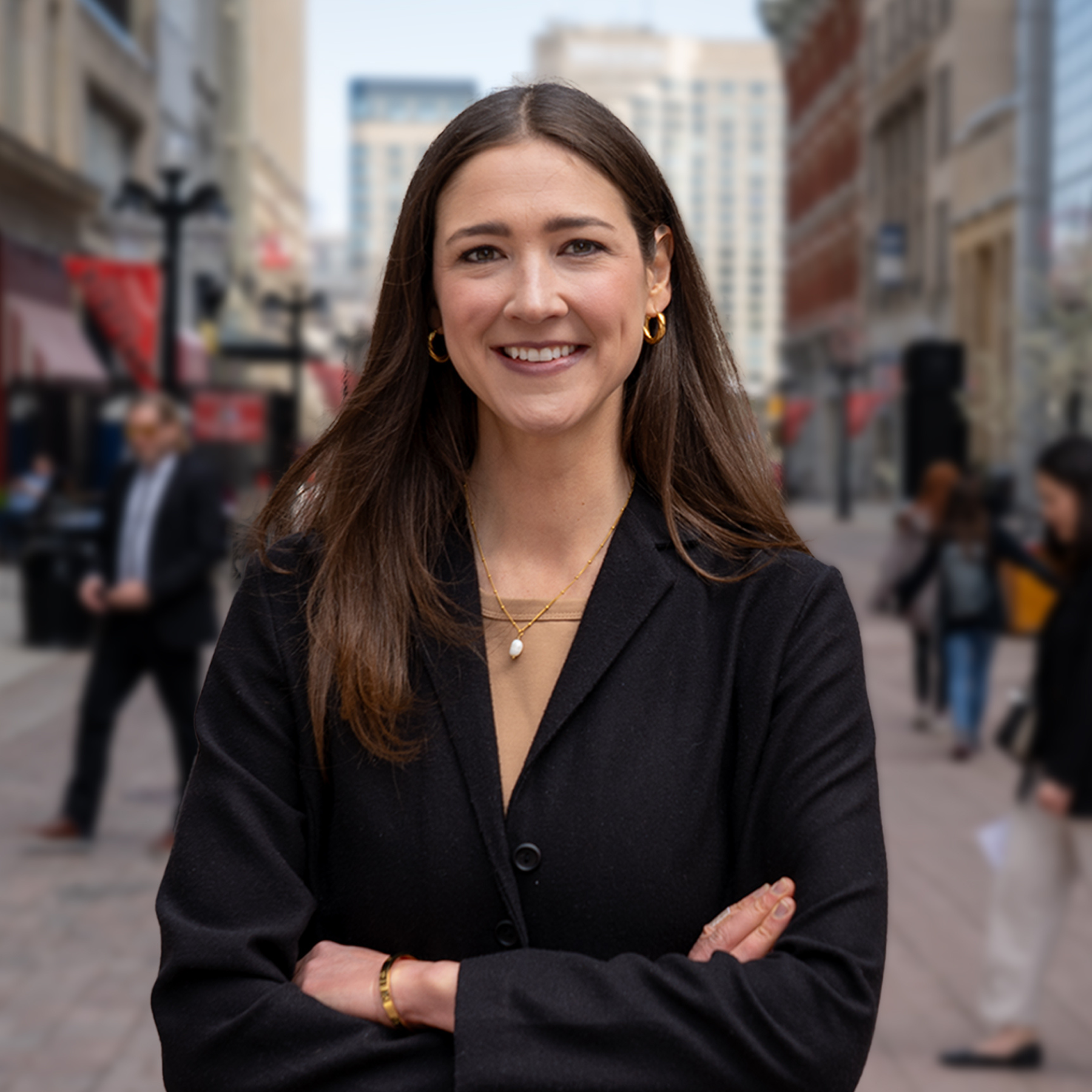
Director of Legislative Affairs for the Prairies and Northern Canada
Brianna Solberg is the Director of Legislative Affairs for the Prairies and Northern Canada at the Canadian Federation of Independent Business, where she helps represent the interests of over 103,000 small and medium-sized businesses across the country. She leads advocacy, research, and policy efforts on behalf of approximately 10,000 members across her region, working closely with government officials and industry leaders to advance practical solutions on key issues including taxation, labour, and the rising cost of doing business. With a background in public policy, legislative affairs, and sector advocacy, Brianna brings both sharp insight and real-world relevance to the conversations shaping the business environment across Western and Northern Canada.
What makes Brianna such an important voice in this space is that she is not just talking about policy from a distance. She is in the work, in the conversations, and in the fight for the people building, employing, and carrying so much of this country forward. She brings intelligence, conviction, and clarity to issues that directly impact entrepreneurs every single day. And when the stakes are high for small business, Brianna is one of the people making sure their voice is heard loud, clear, and impossible to ignore.