Why Business Owners Should Be Shopping Their Bank with John Pelley
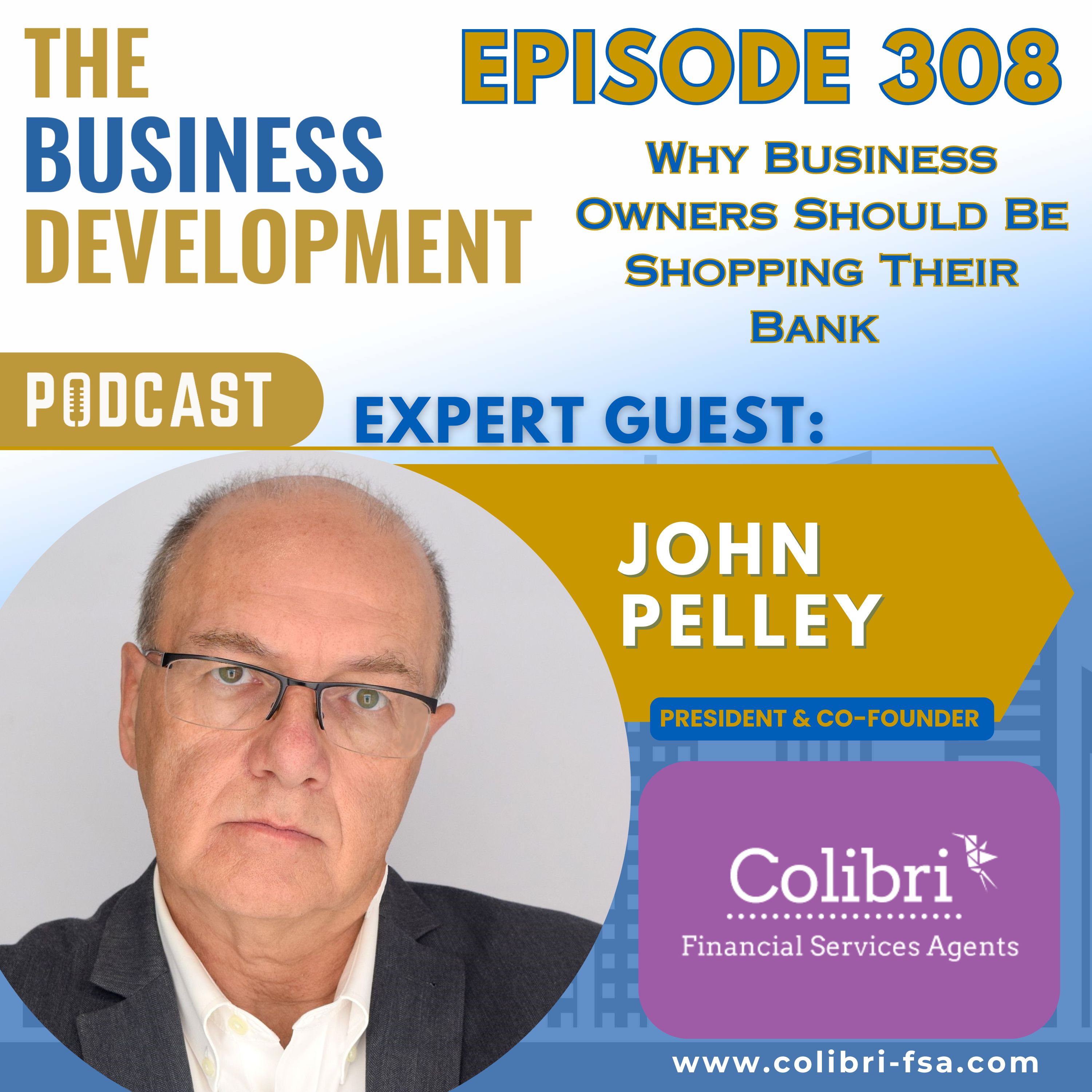


Episode 308 of The Business Development Podcast features John Pelley, a former banker with 35 years of experience spanning small business lending, corporate banking, and global treasury management. John pulls back the curtain on how business banking actually works and explains why banks are not fixed-cost utilities but competitive, for-profit organizations. Drawing from real-world experience, including high-level international deals, he shows how informed businesses can negotiate fees, rates, and structures by understanding how banks assess risk and profitability. The core message is clear: loyalty without review can quietly cost businesses significant money over time.
Throughout the conversation, John walks listeners through why most business owners overpay their banks, where those costs really add up, and how even small changes in banking structure can meaningfully impact the bottom line. He outlines what business owners should be reviewing, how often they should be shopping their bank, and why treating banking costs like a controllable expense—not a fixed one—can unlock real financial leverage. This episode is not anti-bank; it’s pro-awareness, giving business owners the confidence and knowledge to ask better questions, make smarter decisions, and keep more of the money they already earn.
Key Takeaways:
1. Banks are competitive for profit businesses, not service charities, so you should treat every fee and rate like something that can be questioned and improved.
2. Most business owners default to the bank they already use, but brand loyalty can quietly cost you real money year after year.
3. Business banking is not one size fits all, even the big banks have many account options, and choosing the wrong one can bake in unnecessary costs.
4. Every dollar that flows in and out of your business attracts fees somewhere, so higher revenue can actually increase bank costs unless you optimize the setup.
5. It is hard to negotiate what you do not understand, so your first win is gathering your statements, understanding your transaction patterns, and getting clarity on what you are truly paying.
6. The biggest leverage often comes from reviewing loan structures and interest rates, especially when your financial position improves and you have more negotiating power than you think.
7. The rule is if you do not ask you do not get, but asking the right way with the right information is what actually gets banks to move.
8. The people you meet at the branch usually cannot approve major concessions, so your job is to make it easy for them to take a clean package up the chain to decision makers.
9. You do not always need to switch banks to win, sometimes the best play is using competitive offers to get your current bank to match or improve.
10. Banking should be reviewed like any major supplier relationship every few years, because markets change, your business changes, and compound savings can become a serious advantage over time.
Check out Colibri Financial Services: http://www.colibri-fsa.com/
2026 Title Sponsor 🔥
The Business Development Podcast is proudly sponsored by Hypervac Technologies and Hyperfab 🚛
Together, Hypervac and Hyperfab represent North America’s leaders in vac truck manufacturing and industrial fabrication. Their continued support helps make this show possible week after week. Learn more at www.hypervac.com
Join The Catalyst Club
The Catalyst Club is a private leadership community for founders, business developers, and next generation leaders who want real momentum built through consistency, accountability, and honest conversation. This is a room where leaders support leaders, show up as humans, and keep moving forward together week after week.
Join Today: www.kellykennedyofficial.com
Mentioned in this episode:
Hyperfab Midroll